
Humidifiers and Air Quality for Healthier Indoor Air
Humidifiers and Air Quality for Healthier Indoor Air
You spend most of your life indoors — and the air inside your home is often dustier and more polluted than what you'd guess. Two things decide whether indoor air helps or hurts your health: how humid it is, and how clean it is. This guide covers both, and what to do when either one is off.
VivPulse is reader-supported. When you buy through links on our site, we may earn an affiliate commission.
The Ideal Indoor Humidity Range
According to the U.S. Environmental Protection Agency, indoor relative humidity should stay between 30 and 50 percent. Below that range, dry air starts causing problems: itchy skin, dry eyes, scratchy throats, and nosebleeds. Above it, you invite mold and dust mites — which is worse. A cheap hygrometer (often under $10) tells you where your home sits, and that's always the first step before changing anything.
How Dry Air Affects Your Skin and Sleep
Your skin loses moisture faster in dry air, which is why winter leaves so many people with tight, flaky skin no matter how much moisturizer they use. Dry air can also irritate your airways overnight, contributing to congestion, coughing, and restless sleep. If you run heating or air conditioning constantly, indoor humidity often drops well below the 30% floor the EPA recommends — especially in winter.
A humidifier adds moisture back to the air, which can relieve those symptoms. Look for one with a built-in humidistat that shuts off at your target level — automatic control matters more than brand.
Clean Air Is the Other Half of the Equation
Humidity is only half the story. Dust, pollen, pet dander, smoke, and cooking particles all float in indoor air, and they settle in your lungs, your sinuses, and your bedroom. This is where filtration does what humidity can't: an air purifier with a true HEPA filter captures the fine particles that trigger allergies and irritate airways.
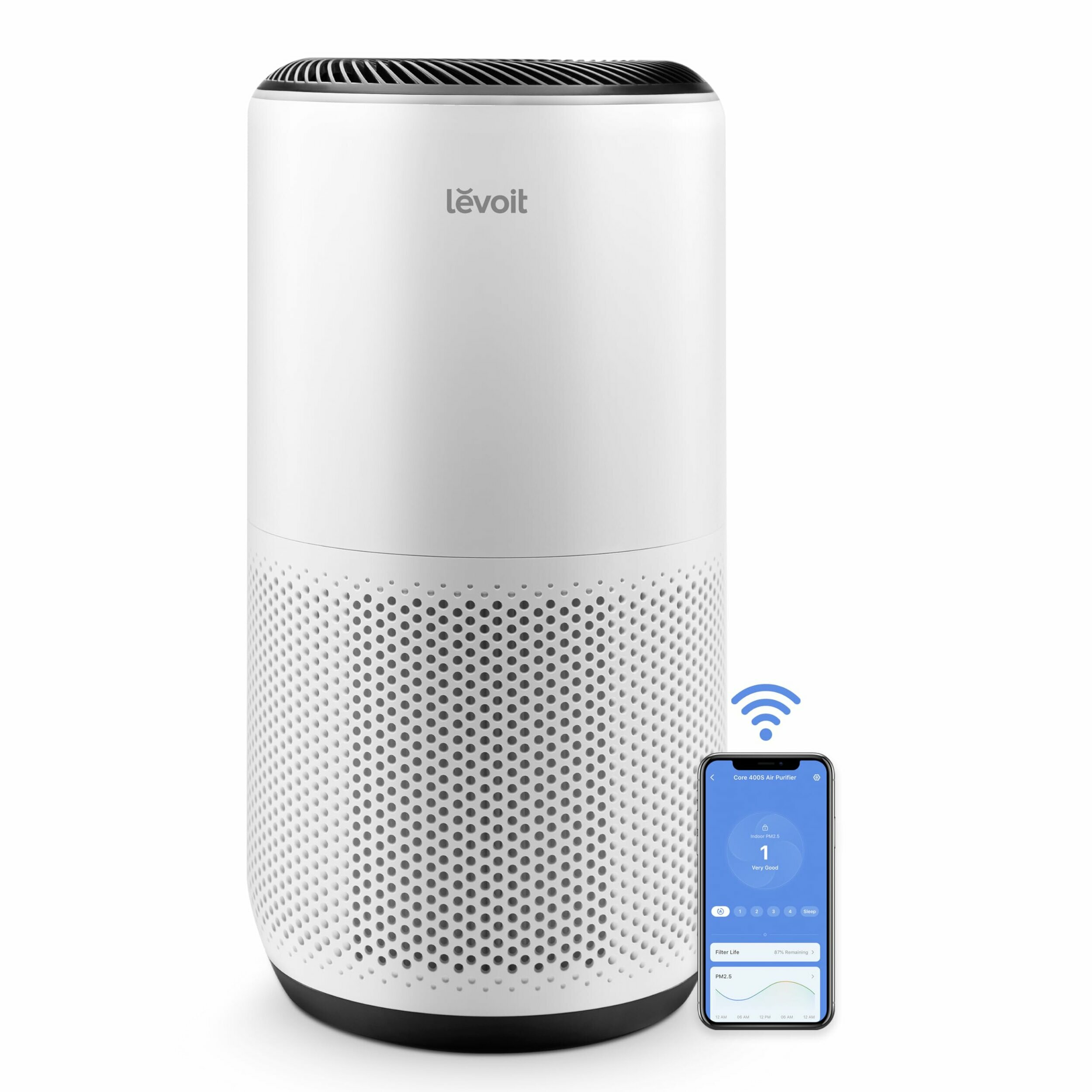
For larger rooms — living rooms, open-plan spaces, or a big bedroom — the smart HEPA air purifier ($189.97 USD) is our catalog pick for cleaner air. It covers rooms up to 1,733 square feet, runs a sleep mode quiet enough for the bedroom, and includes an air quality monitor with auto mode — so it ramps up when the air gets dirty and backs off when it doesn't.
Putting It Together: A Healthier Bedroom
The bedroom deserves special attention because you spend eight hours breathing its air. Three upgrades cover most of it:
- Keep humidity in the 30–50% zone — check with a hygrometer and add moisture in dry months.
- Filter the air — run an air purifier in the bedroom, especially if you have pets, allergies, or street noise pollution outside.
- Keep it clean — wash bedding weekly and vacuum with a HEPA-filter vacuum to cut down on dust mites and dander at the source.
Clean, well-humidified air is one of those invisible foundations that makes everything else — sleep, skin, energy — easier. It fits right into the broader self-care picture in our ultimate self-care guide for busy people, and pairs naturally with a recovery-focused evening routine like the one in our sleep environment checklist.
Frequently Asked Questions
What is the best indoor humidity level?
The EPA recommends keeping indoor relative humidity between 30 and 50 percent. Below 30% you get dry skin and irritated airways; above 50% you risk mold growth and dust mites.
Can dry air affect my sleep?
Yes. Dry air can irritate the nose and throat overnight, causing congestion, coughing, and fragmented sleep. Keeping bedroom humidity in the recommended range helps many people sleep more comfortably.
Do air purifiers help with allergies?
A true HEPA air purifier captures airborne particles like pollen, pet dander, and dust that trigger allergic reactions. It helps most when run continuously in the room where you spend the most time — typically the bedroom.
How often should I replace an air purifier filter?
Most HEPA filters last 6–12 months depending on use and air quality. Follow the manufacturer's indicator and schedule — a clogged filter quietly stops doing its job.