
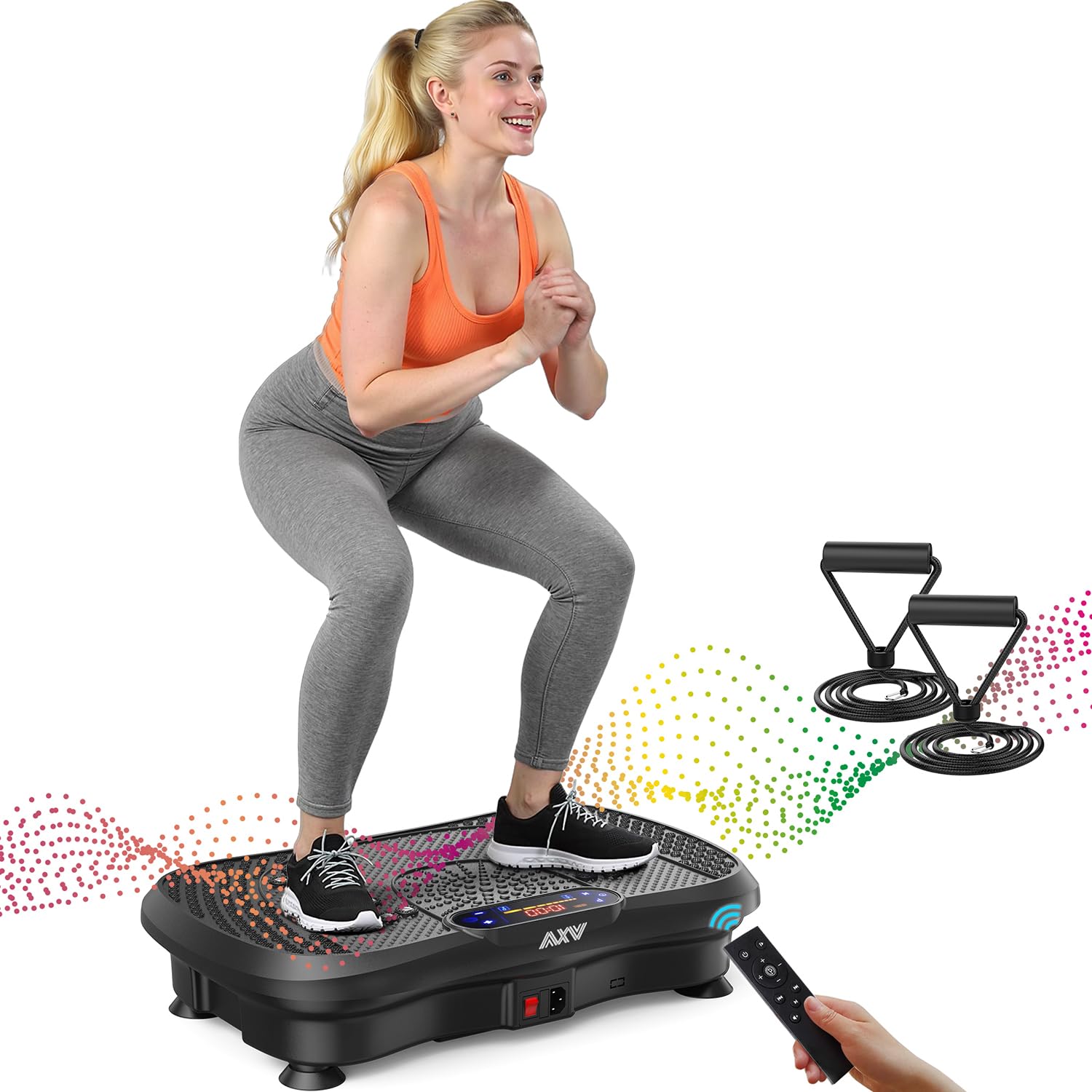
If you've been curious about the low, humming platform you've seen in home-workout videos, here's the plain-English version. A vibration plate (also called a whole-body vibration platform) is a flat platform that oscillates — it moves up and down, or side to side, many times per second. When you stand on it, your muscles respond to that movement with lots of tiny, reflexive contractions as your body works to keep its balance. You're not being shaken into shape; you're standing, squatting, or holding a position while the plate adds a layer of gentle instability your muscles have to respond to.
For busy or desk-bound people, the appeal is obvious: it's low-impact, it happens in your living room, and a session can be as short as ten minutes. Here's what those ten minutes can realistically do — and what they can't.
What 10 Minutes a Day Realistically Does (and What It Doesn't)
Used a few times a week, a short vibration plate session can help with the everyday stuff most of us actually want:
- Muscle activation. Standing, squatting, or holding a calf raise on the plate asks your legs and core to make constant small adjustments. Many people use it to wake up muscles that sit idle at a desk all day.
- Warm-up and circulation. A few easy minutes at a low speed is a common way to warm up before a walk or a workout, and many users enjoy the light, tingly feeling of blood moving in their legs afterward.
- Balance and stability. Because the surface keeps shifting subtly, simply standing on it is a mild balance exercise — done near a wall or sturdy chair if you need support.
- Recovery feel. After a long day on your feet or a regular workout, a gentle low-speed session can feel like a loosening-up ritual for tired legs.
Now the honest part: a vibration plate is not a magic fat-melter, and standing on one won't replace a walk, a workout, or a balanced diet. It's best thought of as a low-effort addition to a movement routine — a way to get sedentary muscles participating again on days when a full workout isn't happening. Pair it with regular walking and everyday movement, and it's a genuinely useful tool. Expect it to do that job, and it won't disappoint you.
Your First Week: A Simple 10-Minute Routine
Keep the speed low for your first sessions, keep your knees soft (never locked), and stop if anything feels sharp or dizzying. Here's an easy week-one session:
- Standing (2 minutes). Feet hip-width apart, knees slightly bent, hands lightly on a chair back or wall if you want balance support. Just breathe and let your legs adjust.
- Mini squats (2 minutes). Slowly bend your knees a few inches — a quarter squat, not a deep one — hold for a few seconds, and come back up. Repeat slowly; there's no rep count to chase.
- Calf raises (2 minutes). Rise up onto the balls of your feet, hold for two or three seconds, lower down. Rest a few seconds between small sets.
- Gentle weight shifts (2 minutes). Standing tall with soft knees, slowly shift your weight from one foot to the other. This is your balance practice.
- Plank with hands on the plate (2 minutes, in short sets). On the floor in a plank position with your hands on the plate's surface and the speed low. Try 20–30 seconds at a time with rests in between — you'll feel your core and arms working. If it's too intense, finish with standing instead.
That's it. Two or three sessions like this in your first week is plenty. The goal is to learn how your body responds, not to max anything out.
Speed and Intensity Basics
Most plates let you adjust the speed (how fast the platform oscillates). A few rules of thumb:
- Lower speeds suit warming up, balance practice, and winding down.
- Mid-range speeds are where most standing exercises and squats feel comfortably challenging.
- Higher isn't automatically better. If you're bouncing, gripping with white knuckles, or your vision is vibrating, you're too high. Your knees should stay soft, and you should be able to hold a conversation.
- Time matters more than intensity. Ten steady minutes at a comfortable setting beats two brutal minutes you never repeat.
Who Should Skip It
Vibration plates aren't for everyone. Check with your doctor first if you're pregnant, have a pacemaker, or have a medical condition — and get medical advice before starting if you've had recent surgery, joint replacements, or any condition you're unsure about. If you feel dizzy, nauseous, or get a headache during a session, step off and don't push through it.
How to Choose Your First Plate
A few things actually matter when you're comparing plates:
- Size and footprint. A compact platform style tucks beside a couch or desk and suits home and office use; larger plates feel more spacious but need a permanent spot.
- Motor and stability. Look for a plate that feels stable underfoot and runs without excessive noise — you'll use a quiet one far more often.
- Controls. Simple speed controls you can adjust easily (some models add a remote or handles) matter more than dozens of preset programs you'll never touch.
- Support nearby. Platform-style plates have no built-in handles, which is fine — just plan to use yours near a wall or sturdy chair while you're learning.
The plate we carry at VivPulse — the Vibration Plate for Home Fitness — is a platform-style model in black, made for exactly this kind of home, gym, or office routine: stand on it, keep it simple, ten minutes at a time.
A Gentle Place to Start
You don't need a new identity as a "fitness person" to use a vibration plate. You need ten minutes, a corner of a room, and a willingness to start smaller than you think you should. Start with the week-one routine above, keep the speed kind, and let consistency do the work.
If you're ready to try it, you can see the Vibration Plate for Home Fitness on our site, and browse the rest of the home wellness collection at www.vivpulse.com. Start small — that's the whole point.
Comments (0)
Post a comment