
Fitness Trackers in 2026: Smartwatch vs. Smart Ring
Fitness Trackers in 2026: Smartwatch vs. Smart Ring
Two very different devices now claim a spot on your body for tracking health: the sport smartwatch and the smart ring. One puts a bright screen on your wrist; the other disappears on your finger. Both count steps, monitor heart rate, and track sleep — but they feel like completely different products. This guide compares them head to head so you can pick the form factor that matches how you actually train and live.
VivPulse is reader-supported. When you buy through links on our site, we may earn an affiliate commission.
Screen vs. Discreet: The Core Trade-Off
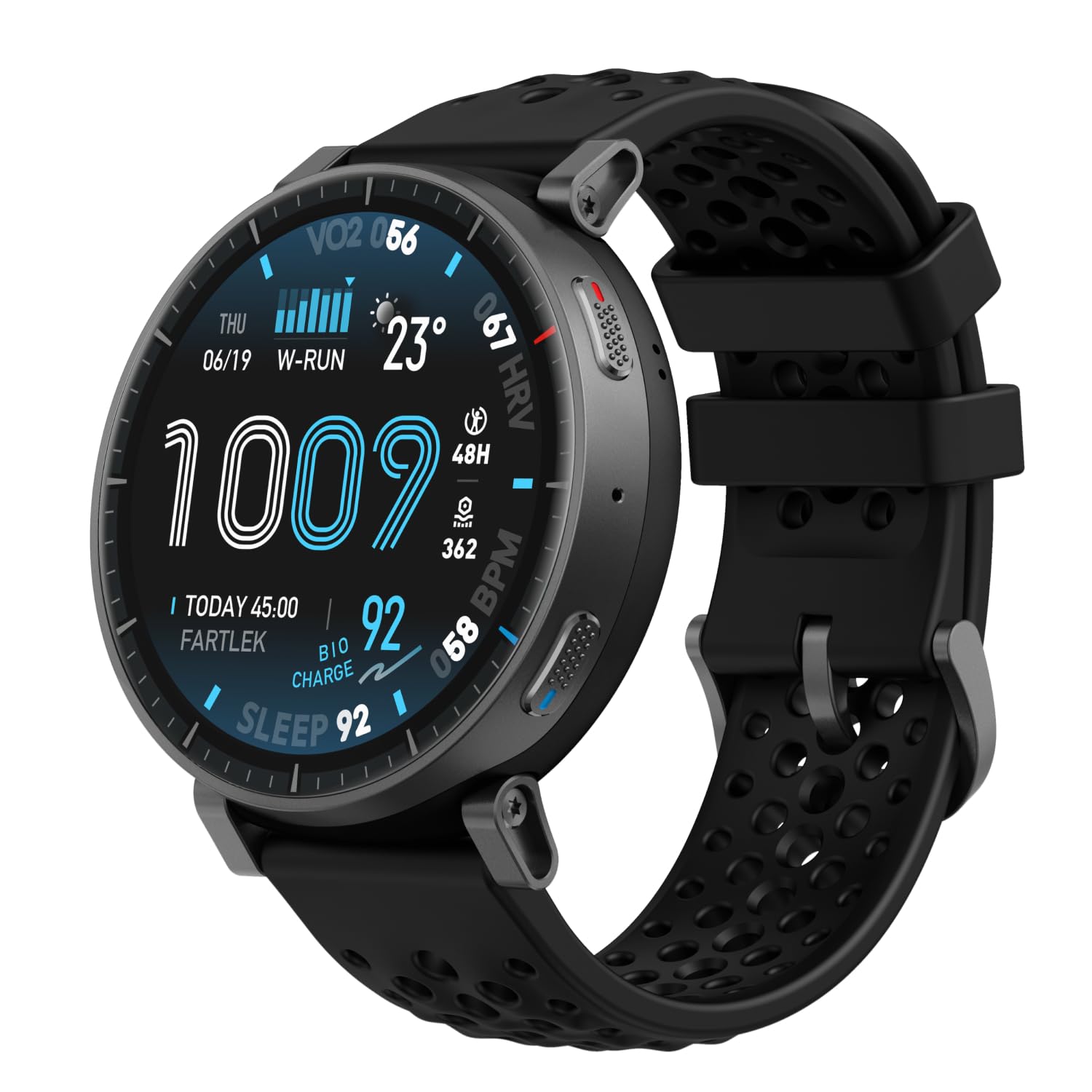
A smartwatch like the Amazfit Active Max sport watch gives you a 1.5" AMOLED display on your wrist — live stats mid-workout, maps, notifications, music controls. A smart ring gives you none of that. What it gives you instead is invisibility: no screen to light up in meetings, no bulky watch face under a dress shirt, no one knowing you're tracking anything. If you love checking real-time data while you move, the watch wins. If you want tracking that disappears, the ring wins.
Battery Life
This is where both devices have leapt forward. The Amazfit Active Max advertises up to 25 days of battery — nearly a month between charges — while smart rings like the Waterproof smart ring health fitness monitor last about 5 days. Five days is solid for a ring, but 25 days is a different league: you can genuinely forget the charger exists. Our full hands-on look at the watch is here: Amazfit Active Max review.
Sleep Tracking Comfort
Rings were practically designed for sleep tracking. They're light, they don't catch on pillows, and many people simply can't sleep with a 48mm watch on their wrist. Watches like the Amazfit Active Max do track sleep (heart rate plus sleep stages), but comfort is personal. If overnight wearability is your top priority, a ring is the easier sell — learn more in Smart Rings Explained.
Workout Tracking
For workouts, the watch is the clear winner. The Amazfit Active Max packs 170 sport modes, built-in GPS, offline maps, and 4GB of storage — a proper training tool for runners, cyclists, hikers, and gym-goers. A ring can monitor heart rate and exercise sessions, but without a screen or GPS it's a supporting actor, not a training partner. If workouts are the main event, get the watch. If you mostly want 24/7 background health data, the ring holds its own.
Price
- Amazfit Active Max sport watch — $169.99 USD. Full-featured sport watch: GPS, 1.5" AMOLED display, 25-day battery, 170 sport modes, heart rate and sleep tracking, 4GB storage with offline maps.
- Waterproof smart ring health fitness monitor — $59.96 USD. IP68 waterproof, 5-day battery life, sleep, exercise, and health monitoring for iOS and Android, with no subscription required.
At roughly a third of the price and with no monthly fee, the ring is the budget-friendly entry into 24/7 tracking. The watch costs more because it does more — it's a training device, not just a tracker.
Accuracy and Sensors
Both devices use optical heart-rate sensors, and for everyday trend tracking — resting heart rate, sleep patterns, recovery — they're comparable. During intense exercise, a wrist-based watch sensor tends to be more stable than a ring sensor simply because the watch sits tighter and moves less. If you chase precise workout data (intervals, zone training), the watch is the safer bet; if you care about daily trends, either works.
Who Should Pick Which
Pick the smartwatch if: you train regularly and want live workout data, GPS routes, and maps; you like a screen; you want one device that replaces a phone for music and notifications during exercise.
Pick the smart ring if: sleep tracking is your priority; you find watches uncomfortable or dislike screens on your wrist; you want the cheapest path into health tracking with no subscription.
Pick both if: you train hard and sleep hard. The watch handles workouts; the ring owns the night. Our heart rate zones for beginners guide shows how to actually use the data either device collects.
Frequently Asked Questions
Is a smart ring as accurate as a smartwatch?
Both use optical heart-rate sensors and are generally fine for trend tracking (resting heart rate, sleep patterns, recovery). For precise workout heart-rate data, a watch or chest strap is typically the more reliable choice.
Can I wear a smart ring while swimming?
The Waterproof smart ring health fitness monitor is IP68 waterproof, and the Amazfit Active Max is water resistant, so both handle water exposure — but always check the product details for depth and duration limits.
Do smart rings require a subscription?
Some brands charge monthly fees to unlock full data. The ring featured here specifically advertises no subscription required.
How long does each device's battery last?
The Amazfit Active Max offers up to 25 days; the smart ring offers about 5 days per charge.